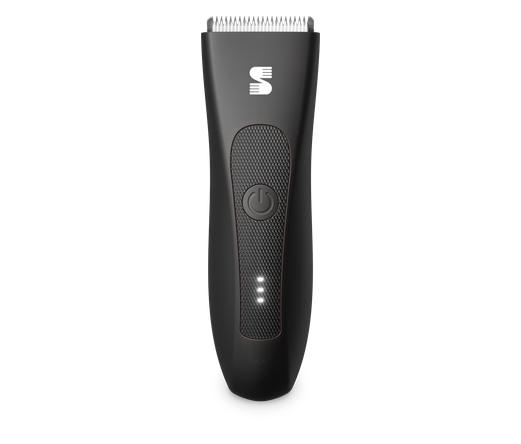
A body and groin trimmer is most useful when you need one tool to manage both larger areas, such as the chest and legs, and smaller areas that require more controlled edging. The right choice should provide enough cutting coverage for efficient body grooming while remaining easy to guide around curves, folds, and narrow contours.
It is not automatically the right tool for every grooming task. Your decision should depend on the areas you plan to trim, the hair length you want to maintain, how closely you expect the tool to cut, and how much cleaning and maintenance you are willing to handle.
When This Type of Trimmer Works Best
A combined body and groin trimmer makes the most sense when your routine includes several areas rather than one isolated grooming task. It can reduce the need to switch between separate devices for the torso, underarms, thighs, and groin area.
For larger areas, cutting width and coverage efficiency matter. A wider cutting path can reduce the number of passes needed across the chest, stomach, back, arms, or legs. However, a head that feels efficient on a flat surface may be harder to position accurately around tight curves.
For contour work, control becomes more important than speed. The tool should be easy to hold at different angles so you can see where the cutting edge is moving. Good visibility is especially useful when shaping edges, working around uneven surfaces, or leaving different lengths in neighboring areas.
This type of trimmer is particularly suitable when you:
-
Maintain short body hair rather than removing it completely
-
Groom several body areas during the same session
-
Want defined edges around the groin or upper thighs
-
Prefer adjustable lengths instead of a single cutting result
-
Need a washable tool that can be cleaned after each use
-
Want to reduce the number of grooming devices you store
The main benefit is versatility, but that benefit only matters when the tool performs both roles reasonably well. A device that covers large areas quickly but feels difficult to control around contours may not be a practical all-in-one choice.
Situations Where Another Tool May Be Better
A body trimmer is designed primarily to shorten and manage hair. It may not produce the same finish as a foil shaver, manual razor, or dedicated precision detailer.
A foil shaver may be more appropriate when your main goal is a consistently close finish on relatively flat areas. A manual razor may cut closer still, although it requires more preparation, careful handling, and attention to skin condition.
A narrow detail trimmer may be easier to use when your only goal is creating sharp lines or reaching small spaces. Its smaller head can improve visibility, but covering the chest, stomach, or legs with it may take considerably longer.
Similarly, a full-size hair clipper may work efficiently on dense or longer body hair, but its weight and head size can make detailed contouring difficult. Clippers are often better suited to bulk reduction than careful finishing around curved areas.
The choice depends on the task:
| Grooming goal | More suitable tool type |
|---|---|
| Shorten hair across the chest, stomach, and thighs | Body trimmer |
| Maintain several body areas at different lengths | Trimmer with length guards |
| Create narrow lines or detailed edges | Precision detailer |
| Remove very short stubble from flatter areas | Foil shaver |
| Achieve the closest possible finish | Manual razor |
| Reduce long or dense hair before detailed grooming | Hair clipper or body trimmer with a longer guard |
A combined tool is most valuable when convenience and length control matter more than achieving the closest possible result.
Important Tradeoffs to Consider
No trimmer can maximize coverage speed, close cutting, visibility, and precision at the same time. Understanding these tradeoffs helps you avoid choosing a device based on one attractive feature.
A broad cutting head may cover the torso and legs efficiently, but it can partially block your view around narrow contours. A smaller head improves placement and visibility, although it requires more passes across larger areas.
Length guards also involve tradeoffs. A longer guard helps maintain an even, natural appearance and reduces the amount of hair removed in each pass. Shorter guards provide a more closely trimmed result, but they may require slower movement and closer attention to direction changes.
When comparing a body and groin trimmer for men, consider whether its design supports both efficient coverage and controlled movement. The tool should match your full grooming routine rather than simply include a label suggesting it can be used on multiple areas.
Wet and dry use is another consideration, but neither option is universally better. Dry trimming often makes loose hair easier to see and may help you judge the final length. Wet use can make cleanup more convenient for some routines, provided the device is intended for that type of use.
You should also consider cleaning access. A washable cutting head can simplify routine maintenance, but hair may still collect under guards, around blade edges, or inside detachable components. Easy rinsing does not remove the need for inspection and thorough drying.
Common Buying and Operating Mistakes
One common mistake is choosing only by the number of attachments. Several guards are useful only when their lengths match your actual grooming goals. A smaller, practical range can be more useful than a large accessory set that you rarely use.
Another mistake is assuming that “body” and “groin” describe identical cutting tasks. Large-area trimming rewards coverage and steady movement. Groin contouring requires slower positioning, a clear view of the cutting edge, and careful adjustment to curves.
Starting with the shortest setting can also create an unwanted result. When you are unfamiliar with a tool or uncertain about your preferred length, begin with a longer guard. You can shorten the hair gradually, but you cannot restore length once it has been removed.
Moving too quickly is another frequent problem. Fast passes may leave uneven sections, particularly where hair grows in different directions. Light, overlapping passes generally make it easier to identify missed areas without repeatedly pressing the tool over the same spot.
Users may also ignore pre-trimming when dealing with longer hair. Removing a large amount of hair with a very short guard can cause pulling, clogging, or inconsistent movement. Reducing the length in stages often gives you better control.
Poor cleaning habits create avoidable performance problems. Hair and moisture left around the cutting assembly can interfere with movement and make the tool less pleasant to use. Follow the manufacturer’s cleaning and drying instructions rather than assuming that a quick rinse is sufficient.
Finally, do not assume that more pressure produces a closer or more even result. A trimmer should be guided steadily across the surface. Excessive pressure can reduce visibility and make it harder to maintain a consistent angle.
A Practical Selection Checklist
Before choosing a trimmer, define your routine in specific terms. “Body grooming” is too broad to guide a useful purchase.
Use the following checklist:
-
List the areas you plan to trim. Include both large surfaces and smaller contours.
-
Choose your usual target length. Decide whether you want visible body hair, short stubble, or a nearly smooth appearance.
-
Check the guard range. Make sure the available lengths match your routine rather than focusing on the total number of guards.
-
Consider head size. Balance broad coverage against visibility and maneuverability.
-
Evaluate grip and control. The tool should be easy to reposition without covering your view of the cutting area.
-
Review cleaning requirements. Look at how guards, heads, and internal hair collection areas are accessed.
-
Check intended use conditions. Confirm whether the device is designed for dry use, wet use, or both.
-
Consider maintenance. Determine whether the cutting head requires lubrication, replacement, or other regular care.
-
Compare it with specialized tools. Decide whether one versatile trimmer is enough or whether a separate shaver or detailer would better handle part of your routine.
It is also useful to think about the order in which you groom. You might use a longer guard for the torso, a shorter guard for the thighs, and controlled freehand passes for selected edges. A tool that supports this sequence will be more useful than one optimized for only a single finishing length.
Making the Final Choice
A body and groin trimmer should be selected as a multi-area grooming tool, not as a device for one narrow region. Its value comes from balancing efficient coverage on larger surfaces with enough control, visibility, and length adjustment for more detailed work.
Choose based on your real grooming areas, preferred hair length, cleaning routine, and expected finish. Select a different tool when close shaving, highly detailed edging, or heavy bulk reduction is your main priority. The most practical option is the one whose strengths match the tasks you perform regularly, while its limitations remain acceptable for the results you want.